MAP Announcement
Ms. McLaughlin will assist Mr. Brownfield with this transition through May 31, 2013.
Free Online Training for Private Well Owners
The Private Well Class is a free online service to educate homeowners about their private wells. The next webinar, Proper Care of Your Private Well, will take place on April 17th, 2013 at 1:00 CT. To learn more or to register, click here.
Gayle Nybo, Database and Reporting Director at Midwest Assistance Program, has participated in the Private Well Class over the past month and encourages those with private wells or those interested in ground water protection to join her online April 17th.
"As a private well-owner in a rural area that has experienced a large population growth over the last 10 years, I felt this would be a good opportunity to learn more about my well and what types of impacts there may be on my system’s water quality, quantity etc. as more wells are being drilled in my neighboring areas. The classes presented have been very informative. They provide easy to understand lesson formats (one lesson per week) with helpful diagrams. So far, through these lessons I have attained a more educated understanding of my water system and how it works, and what can be done to properly maintain it, alleviating the need for expensive repairs or replacement. The lessons also provide great resources to refer to in the future. I’m looking forward to learning even more from the upcoming webinars."
You can also follow The Private Well Class on Facebook!
Midwest Assistance Program Helps Rural Communities Get Safe, Affordable Water
Grantees of ACF’s Rural Community Development (RCD) program provide training and technical assistance on safe, affordable water and waste water systems in low income communities and tribal areas, many with populations at or below 2,500 people. Unlike large, urban areas with dedicated staff to address water needs and manage and maintain systems, these small communities often have a shortage of experienced and professional staff.
One successful RCD grantee is the Midwest Assistance Program (MAP). MAP provides on-site technical, managerial and financial assistance to rural and tribal communities in Iowa, Kansas, Minnesota, Missouri, Nebraska, North Dakota, South Dakota, Montana and Wyoming.
The City of Coleman, South Dakota, requested MAP assistance to help address discrepancies in water records, water main breaks and areas of stagnant water. The city’s current water meters had become obsolete and unserviceable. MAP helped the city develop and submit the State Water Plan Application and funding applications. MAP helped secure funds for additional meter and water main projects and they will help the City of Coleman repair and/or replace all the water mains in the entire community.
With funding from ACF’s RCD program, MAP continues to work with the community as part of the Water Main Project and helps to ensure that the people of the City of Coleman have a safe, secure and clean water and wastewater infrastructure.
MAP and RCAC Begin New Partnership
Midwest Assistance Program (MAP) is pleased to announce a partnership between MAP and our RCAP sister organization, Rural Community Assistance Corporation (RCAC) to provide technical assistance to communities in Montana, North Dakota, South Dakota and Wyoming starting October 1, 2012. The high quality of technical assistance will continue to be the same, as MAP staff currently serving these states are now RCAC employees. This collaboration with MAP’s regional partner organization was developed to allow expanded support to these rural communities in this time of decreasing resources.
MAP looks forward to working more closely with RCAC and all the RCAP regional partners to improve and expand our technical assistance for rural communities!
Why Americans are Not Talking About the Water Infrastructure Crisis
The U.S. water infrastructure is aged and decaying. In fact, the American Society of Civil Engineers and the Water Innovations Alliance foundation rate the U.S. water infrastructure at a “D-.” The EPA estimates repairing and updating the water infrastructure at $365 billion. Many pipes were installed prior to World War II and now lead to, on average, 700 main breaks a day.
Why is this important and critical to address? Click here to read the entire story posted recently on the Our Water Counts blog.
Protecting Groundwater Protects Public Health, the Environment

September 6, 2012
MAP encourages the public to protect public health and the health of the environment by protecting groundwater beginning on Protect Your Groundwater Day, Sept. 11.
In the United States, 88 million Americans rely on groundwater-supplied community water systems, while another 42 million Americans rely on individual household water wells. Continue reading....
Funding is Available to Assist Your System with Drought-Related Problems
With on-going severe drought being experienced in much of the MAP service area, we are hearing reports about water conservation measures being invoked, drinking water systems becoming concerned about their supply of water, and unusual and costly repairs being caused by the drought.
If your system is faced with making costly repairs such as replacing a pump, motor, or fixing a major line break, and you do not have the funds on hand to pay for such a thing, please be aware that MAP has a revolving loan fund that can be used to pay for such system repair costs. Continue Reading
Have You Ever Considered a Career in Water Operations?

A comprehensive study conducted in 2005 by the American Water Works Association Research Foundation (now the Water Research Foundation) determined that, within ten years – by 2015 – more than one-third of the water and wastewater workforce will retire. This is a very secure field to get into because operators will always be needed everywhere. And, because operators are on the front lines of protecting public health and the environment, they are the ultimate green jobs! Operators do not need an extensive education (often not even college), but there is some training and experience needed. RCAP has produced two brochures that explain what being a water or wastewater operator would entail, and how to go about getting the necessary training. Additional information, as well as informational videos can be found on the RCAP website.
USDA Announces Federal Resource Guide to Assist Rural Communities
July 20, 2012 –
USDA Under Secretary for Rural Development Dallas Tonsager today announced the publication of a guide outlining programs the federal government has available to support rural communities as they promote economic development and enhance the quality of life for rural residents.
"Rural communities across the country are working hard to build their economies and provide services to their residents," Tonsager said during a speech today at a conference of the National Rural Economic Developers Association. "Creating great places to live, raise families, provide recreational opportunities, and infrastructure for high paying jobs in rural America is very important to the Obama Administration and our efforts at USDA. This publication will provide easy, one-stop access to federal programs." To read the press release in it's entirety, click here.
Nebraska WAU-COL Regional Water System Project Celebrates
Completion of Phase 1
Back in 2006, MAP staff Harold Reynolds became involved with a project that would become the WAU-COL Regional Water System. The Wausa and Coleridge (WAU-COL) project area in northeast Nebraska had several small villages with either a quantity or quality problem with their drinking water. Wausa and Coleridge had a sufficient source of good quality water that could provide enough water to supply the six villages and themselves. MAP staff, USDA-RD, Northeast Nebraska RC&D, Nebraska Health and Human Services and the Natural Resource Districts in the area formed an advisory coalition to assist the communities in forming the District. The scope of the project included the development of a new water source for the communities of Magnet, McLean, Belden, and approximately 15 rural users. The project was approved and USDA-RD provided funding.

Six years and nearly $2.4 million later, Phase 1 of the project has been completed and was marked by a celebration on Earth Day (April 20, 2012). Nebraska USDA Rural Development Community Programs Director, Denise Meeks, and staff celebrated the completion with the Lower Elkhorn Natural Resources District and area residents. Special recognition was given to those who were instrumental to the project as they each signed a segment of water pipe. “Rural Development is pleased to assist in this regional water system,” said Meeks. “The new system will ensure that quality water will be available to Belden, Magnet, McLean and the rural users for the long term. Clean, safe drinking water is a priority of USDA Rural Development.”
Going forward, Reynolds will continue to assist with monitoring and inspection of construction and change orders, and help develop a set of rules and regulations for the system. The project is still on schedule to be finished by the end of June or July.

Tornado Outbreak Damages White Sulphur Springs Water System
White Sulphur Springs, Montana, rarely sees tornadoes, but on the afternoon of June 5th, several funnels were sighted and photographed south of the city. Leo Kapp, MAP Technical Assistance Provider, has been assisting the city with obtaining financing for a new water storage facility. That facility currently has bid, construction is expected to start in late June, and be completed later this year. The storm destroyed the roof and walls of the drinking water filtration building and damaged the roof on the storage tank. As a result of the damage to the water tank, the city was under a boil order for several days. The city of White Sulphur Springs has since done temporary repairs to the storage facility, and are nearing completion of the cleaning of the storage tank. The town has been downgraded to a health advisory after testing has shown no contamination in the distribution system. MAP staff will continue to assist the city as requested.
Water Filtration Building - Before
Water Filtration Building - After
EPA and Department of Veterans Affairs to Connect Veterans with Jobs
in Water Sectors

5/30/2012: WASHINGTON - The U.S. Environmental Protection Agency (EPA) and the U.S. Department of Veterans Affairs (VA) Vocational Rehabilitation and Employment Program announced today a memorandum of agreement to connect veterans with disabilities to career opportunities in the water and wastewater sectors such as wastewater plants and drinking water facilities as part of EPA's Water Sector Workforce Initiative. This effort will be beneficial to both the environment and economy as clean water and job placement for veterans are top priorities of the Obama Administration.
"This agreement comes at the perfect time to address the predicted workforce shortages in the water and wastewater industries and the need for transitioning veterans into civilian jobs," said Nancy Stoner, acting assistant administrator for EPA's Office of Water. "EPA believes that well-trained and experienced water sector professionals are vital to ensuring sustainable, properly operated systems." To read the entire article, click here.
Agriculture Secretary Vilsack Celebrates USDA's 150th Year of Service
WASHINGTON, May 15, 2012 - Agriculture Secretary Tom Vilsack today marked the 150th anniversary of the U.S. Department of Agriculture and highlighted the positive impact that USDA has on the life of Americans each day.
"For 150 years, USDA has supported our nation's economic prosperity and touched the lives of generations of Americans," said Vilsack. "I'm proud of the USDA employees who carry out President Lincoln's legacy throughout the country and around the world, making USDA a truly 'Every Day, Every Way' department. Whether improving domestic and international access to food, promoting nutrition and safety of our food supply, conserving our natural resources, advancing agricultural exports, or developing the rural economy, USDA helps Americans to lead better lives." Read the entire press release here.
For more information on the 150th anniversary celebration, please visit www.usda.gov/usda150. Additional information on USDA's work to strengthen the American economy can be found at www.usda.gov/results.
A Drop of Knowledge (formerly the eBulletin ) is one of RCAP’s main communications resources. It is an electronic newsletter delivered via email that provides tools focusing on issues facing water and wastewater systems and small, rural communities.
The newsletter's name reflects its purpose, to provide:
- useful, practical information – knowledge that you can put into action in your water or wastewater system or community
- a small amount of new knowledge – just enough to make a difference without requiring you to embark on large improvements that may be overwhelming
Click here to view all issues and subscribe!
New RCAP Publication Now Available
Protecting Water Quality by Optimizing the Operations and Maintenance of Distribution Systems is now available. This publication provides background information on how to maintain water quality in drinking water distribution systems and treated-water storage facilities by concentrating on common problems and challenges and identifying potential improvements and solutions. The primary audience is operators of water distribution systems at utilities that serve up to 3,300 people, but operators of larger systems and other stakeholders may also find it valuable. Focuses on regulatory requirements and best practices of the drinking water community. Is intended to serve as a resource for an individual operator’s study or as a reference text in a classroom or training setting. Click here to download a PDF copy of the guide from our Guides and Publications page, or contact a MAP Technical Assistance Provider in your state to request a printed copy.
MAP's Spring e-SOURCE Newsletter
.jpg)
MAP's Spring 2012 issue of the e-SOURCE newsletter has been sent out. If you haven't received yours, click here to preview. There's a subscription link at the bottom if you'd like to add your e-mail address to our mailing list for future issues.
USDA Announces Assistance to Rural Communities and Residents Affected by Recent Tornadoes
WASHINGTON, March 14, 2012 Agriculture Secretary Tom Vilsack today announced comprehensive outreach efforts are underway to assess damage and assist rural Midwest and Southern communities in the wake of recent deadly storms.
"These storms struck the very heart of rural America, " said Vilsack. "USDA regional and local staff members are on the front lines, have worked each day since the storms hit, and for many it's personal: they live and work alongside the victims. I've directed our expertise and resources to be put to the fullest possible use." Click here to read the News Release in its entirety.
RCAP Publication for Board Members is Now Available

The Big Guide for Small Systems: A Resource for Board Members is now available. This publication is intended for both new and experienced members of the board of directors of a drinking water or wastewater utility or members of the highest governing board of a system. For new board members, it is an ideal orientation to all of the aspects of your new role. For those with some experience, it can serve as a useful reference guide for your continuing role. Used on a group basis with whole boards, it can help set some standards in your work together, enabling everybody to get on the same page and moving in the same direction.
Regardless of your experience level, as a board member, you have chosen to be responsible for and have been elected to maintain and improve your community's health by protecting its water. It's a big job, and understanding and using this guide can be helpful in performing your duties. Click here to download a PDF copy of the guide from our Guides and Publications page, or contact a MAP Technical Assistance Provider in your state to request a printed copy.
New tool provides access to
water-pollution data

EPA announced the release of a new tool that provides the public with important information about pollutants that are released into local waterways. The discharge monitoring report pollutant loading tool brings together millions of records and allows for easy searching and mapping of water pollution by local area, watershed, company, industry sector and pollutant. The public can use this new tool to protect their health and the health of their communities.
Searches using the pollutant loading tool result in “top 10” lists to help users easily identify facilities and industries that are discharging the most pollution and impacted waterbodies. When discharges are above permitted levels, users can view the violations and link to details about enforcement actions that EPA and states have taken to address these violations.
Facilities releasing water pollution directly into our nation’s waterways, such as wastewater treatment plants or industrial manufacturers, must receive a permit to discharge under the Clean Water Act. Each permit sets specific limits for how much can be discharged. It also requires the permittee to frequently sample their wastewater discharges and report the data to their state or EPA permitting authority. (story reprinted from rcap.org website)
Go to the tool
Joint HAC and RCAP Publication Focuses on Housing and Water: The Critical Connection
Over the last 40 years, the Housing Assistance Council (HAC) and the Rural Community Assistance Partnership (RCAP) have worked individually and cooperatively to improve the living conditions of the lowest-income rural residents throughout America.
This joint issue of Rural Matters and Rural Voices provides examples of successful projects that have improved opportunities for affordable housing and water and waste services for low-income rural families and communities.
Recently MAP partnered with CRG and transferred their $200,000 Wells Fargo investment to CRG. That partnership yielded an additional $300,000, for a total of $500,000 being added to the CRG/RCAP Loan Fund. These loans are now available throughout the MAP nine-state region. "Keeping the Water Flowing in Rural America for 35 years" is an article within the publication that addresses how the CRG/RCAP loan fund is helping small communities meet critical capital needs and find new funding. To view the full issue, click on the image on the left.
How do we get clean, safe water?
Despite using and benefitting from drinking water and wastewater systems multiple times every day, most of us don't even think about or know how these systems work. It takes a lot, in terms of natural, human, financial and other resources, as well as physical, chemical and biological processes, to bring clean, safe drinking water to your home or to deal wtih the waste you produce from a toilet or washing machine. RCAP has created animated diagrams with short videos to explain some of what is required in treating water. The videos are meant to make non-operators more comfortable with the vocabulary and terms that a plant's operator uses and to help a utility's decision makers understand what is required to operate a dependable and sustainable water utility.
Surface Water Treatment Process

Liquid Assets: The Story of Our Water Infrastructure
Liquid Assets, a ninety-minute documentary, tells the story of essential infrastructure systems: water, wastewater, and stormwater. These systems — some in the ground for more than 100 years — provide a critical public health function and are essential for economic development and growth. Largely out of sight and out of mind, these aging systems have not been maintained, and some estimates suggest this is the single largest public works endeavor in our nation's history. For more information and broadcast schedule, click here.
Finding Solutions,
Revitalizing Rural Communities
To motorists speeding by on the interstate or state highway, small towns may look idyllic. Yet many communities and tribal nations face seemingly overwhelming challenges and few resources to overcome them. However, through individualized support from Midwest Assistance Program, Inc., they find the solutions that will help revitalize their communities.
Welcome to Midwest Assistance Program’s Web site. It’s been designed
to provide you with the information, programs, services and support you
need to find solutions to your community’s challenges.
Our mission
Midwest Assistance Program, Inc., is dedicated to helping rural communities and tribal nations improve their environment, quality of life and achieve self-sustainability.
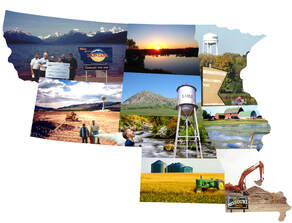
For resources and programs specific to your state, click on the map. For resources and programs specific to tribal nations, click here.